How to Prepare for Deep Sea Fishing in Punta Cana
Before the marina is awake, Punta Cana’s offshore waters are already moving with possibility. A deep sea fishing day can mean chasing mahi-mahi over bright blue water, watching flying fish skip across the wake, or feeling the sudden pull of a tuna, wahoo, or billfish. The experience is exciting, but the guests who prepare for deep sea fishing properly are usually the ones who enjoy every mile of the ride – not just the moment a rod bends.
A quality charter supplies the boat, crew, fishing gear, bait, and local knowledge. Your job is to arrive ready for the sun, the motion of the ocean, and a few hours away from shore. These simple preparations make a big difference whether you are a first-time angler, a couple adding adventure to a resort stay, or a group planning a memorable Dominican Republic excursion.
Prepare for Deep Sea Fishing Before Charter Day
Start by reading your charter confirmation closely. Check the departure marina, pickup time, trip length, what is included, and what is not. In Punta Cana and other Dominican Republic coastal destinations, pickup arrangements can vary by hotel zone and marina location. Being ready early helps the crew leave on time and gives you the full offshore experience you booked.
Deep sea fishing is not a casual beach activity. Conditions can change quickly once the boat leaves the protected coastline. Confirm whether your trip is private or shared, how many people will be aboard, and whether children can participate. If anyone in your party has limited mobility, a medical condition, or is pregnant, ask about suitability before departure. A responsible operator will be clear about the boat ride, sea conditions, and safety expectations.
The night before, eat a normal meal, drink plenty of water, and get some rest. Avoid arriving dehydrated after a late night out, especially if you are joining an early morning departure. The tropical sun and boat movement can make fatigue hit harder than expected.
Handle Motion Sickness Early
Even travelers who feel fine on ferries or catamarans can experience motion sickness on a smaller fishing boat. The ride offshore may be bumpy, particularly when the wind picks up. If you are prone to motion sickness, speak with a pharmacist or doctor before your trip about an appropriate over-the-counter option. Many medications work best when taken before you board, not after you feel unwell.
On the boat, stay in the fresh air and look toward the horizon instead of down at your phone. Avoid reading, scrolling, or spending extended time in the cabin if the water is choppy. Small, plain snacks can also help. Let the crew know if you are not feeling well. They have seen it before and can suggest the best place to sit or stand.
What to Wear for a Day Offshore
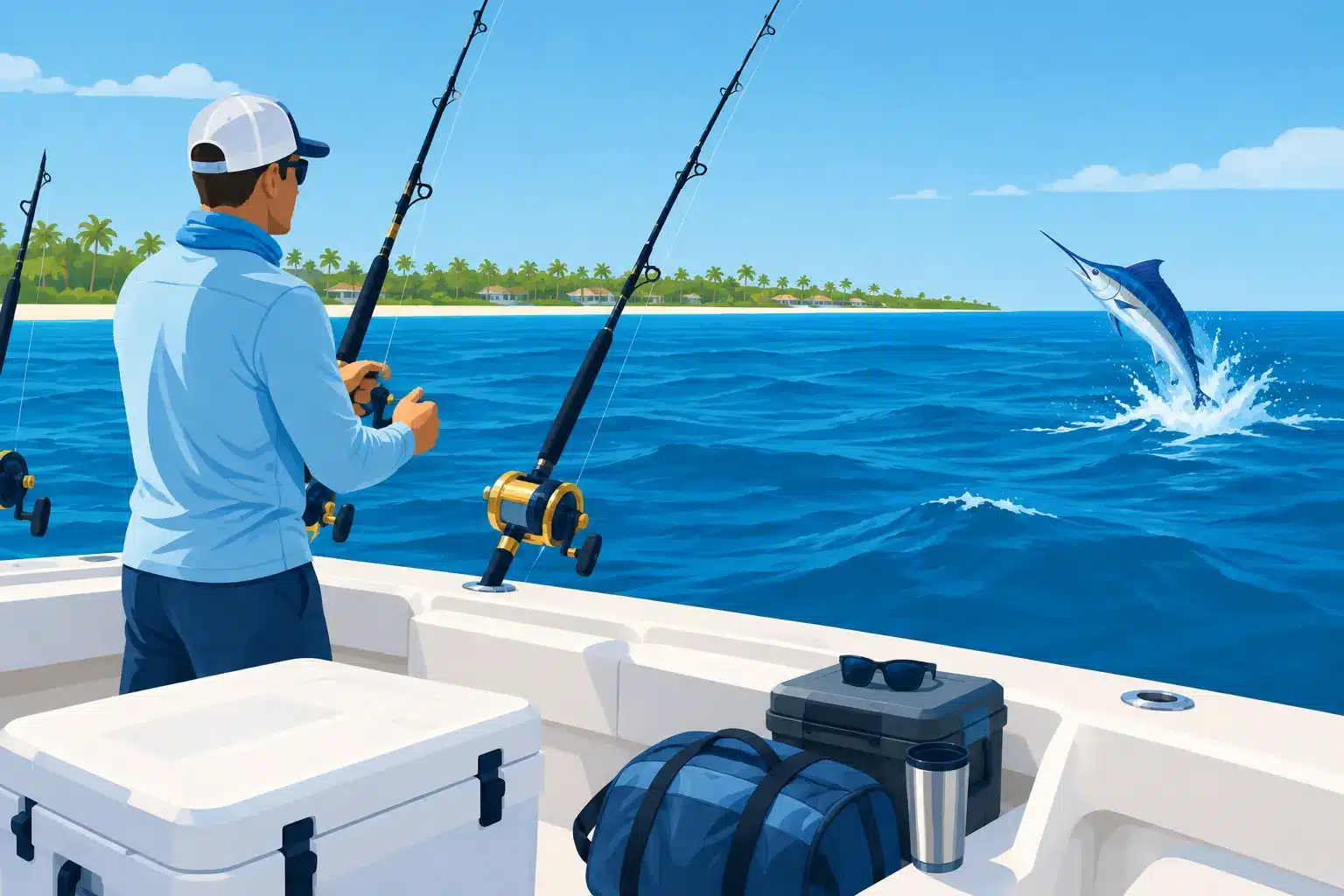
Dress for strong sun, sea spray, and changing comfort levels. A lightweight, quick-drying shirt with sleeves offers better protection than a tank top, while shorts or light fishing pants are both practical choices. Choose clothing you do not mind getting wet from spray, rain, bait, or the excitement of landing a fish.
Shoes matter more than many guests expect. Wear closed-toe, non-slip shoes or secure water shoes with a good grip. Flip-flops are convenient at the beach, but they can slide on a wet deck and offer little protection around fishing equipment. Keep jewelry minimal, secure loose hats with a strap, and tie back long hair when needed.
A light rain jacket can be worthwhile during seasons when passing showers are possible. It takes very little room in a bag and can make a wet ride back to shore much more comfortable. Bring a spare dry shirt for after the charter, especially if you are heading directly to lunch, your resort, or another excursion.
Pack Light, But Pack Smart
Charter boats have limited dry storage, so one small bag is usually enough. Your essentials should protect you from the elements and keep you comfortable without crowding the deck. Bring reef-conscious sunscreen with high SPF, polarized sunglasses, a hat, and a reusable water bottle if permitted by your operator.
Polarized sunglasses are especially useful offshore. They cut glare bouncing off the water, help you spot activity near the surface, and protect your eyes from sun and wind. A retainer strap is a smart addition because the ocean has claimed plenty of expensive sunglasses.
You may also want a small towel, motion sickness medication, personal medications, lip balm with SPF, and a waterproof phone pouch. Pack a portable charger only if it is protected from water. Most guests take plenty of photos, and saltwater is not kind to phones or camera equipment.
If you plan to bring snacks, keep them simple and low-mess. Ask the charter provider what food and drinks are already included before loading up a bag. Glass containers are usually a poor choice on a moving boat, and heavy meals are not ideal before a long ride offshore.
Know What Your Charter Crew Handles
One of the best parts of booking a guided fishing charter is that you do not need to arrive as an expert. The captain understands the local currents, seasonal patterns, and productive offshore areas. The mate typically prepares the bait, sets the lines, watches the spread, and guides guests through the action when a fish strikes.
Listen carefully during the safety briefing. You will learn where life jackets are kept, how to move safely around the vessel, and which areas should remain clear while the boat is underway. When the crew calls out a hookup, wait for instructions before grabbing a rod. The deck can become busy quickly, and teamwork keeps the experience safe and fun.
Ask questions while you are out there. A good crew is often happy to explain why they are trolling at a certain speed, what bait is being used, or what species may be running that day. Fishing success is never guaranteed – it depends on weather, water conditions, season, and luck – but local expertise gives you the strongest possible chance.
Set Realistic Expectations About the Catch
Deep sea fishing is an adventure, not a fish counter. Some days bring multiple strikes and nonstop excitement. Other days may be quieter, even when the captain and crew make all the right moves. The open ocean is wild, which is exactly what makes the experience so rewarding.
If catching a specific species is your top priority, ask before booking about the best time of year and the typical offshore conditions in your destination. Mahi-mahi, wahoo, tuna, marlin, sailfish, and barracuda can all be possibilities in Caribbean waters, but their availability shifts across the year.
Also ask about the operator’s catch-and-release practices and local regulations. Billfish are commonly released to support healthy sport-fishing populations. For edible catches, policies differ. Some charters may arrange for a local restaurant to prepare an eligible catch, while others have rules that limit what can be kept. Clarifying this in advance prevents disappointment and helps you make responsible choices.
Travel With Kids or a Group? Plan the Boat Dynamic
Families and groups can have an outstanding time offshore, but the right charter format matters. A private boat gives your party more flexibility with pace, comfort, and how involved each guest wants to be. Shared charters can be a great value for travelers who enjoy meeting others and are comfortable sharing the fishing rotation.
For children, choose an age-appropriate trip length and explain that there may be waiting between bites. Bring sun protection, familiar snacks if allowed, and something simple to keep them entertained without making them motion sick. An adult should always stay close to younger guests, particularly while the boat is moving or the deck is active.
Groups should decide before departure how they will share the rods. Some friends want everyone to take turns fighting a fish; others may prefer the person nearest the rod at the time of the strike. There is no wrong answer, but agreeing ahead of time keeps the energy positive when the action starts.
Make the Most of Your Dominican Republic Fishing Day
Leave valuables at your hotel unless you truly need them. Bring cash only if you plan to tip the crew or purchase something at the marina, and keep it in a waterproof pouch. Tipping practices vary, but exceptional service, patient instruction, and a hardworking crew are worth recognizing.
Most importantly, stay present. Put the phone away for part of the ride, watch the horizon, and enjoy the coastline disappearing behind you. The thrill is not limited to the catch. It is the sunrise departure, the sound of the reels, the sea air, and the shared anticipation between strikes.
When you book with a trusted local partner such as JacTravel Group, you can focus less on logistics and more on the experience ahead. Arrive rested, wear the right gear, follow your crew’s lead, and give the ocean enough time to surprise you.