How to Choose a Fishing Charter in Punta Cana
A great day offshore can mean hearing a reel scream while the Punta Cana coastline fades behind you. A disappointing one can mean spending hours on a cramped boat, unclear about what is included, while the crew fishes a style you never wanted. Knowing how to choose a fishing charter helps you book the experience that fits your vacation, your group, and the fish you hope to catch.
In the Dominican Republic, charters range from quick inshore outings to full-day big-game adventures for blue marlin, mahi-mahi, wahoo, tuna, and sailfish. The right choice is not automatically the biggest boat or the lowest price. It is the charter that matches your expectations before you step aboard.
How to Choose a Fishing Charter That Fits Your Trip
Start with one simple question: what do you want the day to feel like? Some travelers want serious offshore sport fishing and are happy to leave before sunrise. Others want a relaxed private outing with friends, cold drinks, ocean views, and the chance to catch something exciting. Both can be excellent, but they require different boats, trip lengths, and crew approaches.
If fishing is the main event, look for a charter focused on the species that are active during your travel dates. Offshore boats departing from Punta Cana, Cap Cana, Bayahibe, La Romana, Puerto Plata, and Samaná may target different waters and seasonal opportunities. A local operator should be able to explain what is realistically biting, rather than promising every trophy species year-round.
If you are traveling with children, first-time anglers, or non-fishing companions, a half-day private charter is often the smarter choice. It gives everyone enough time on the water without turning a vacation day into an endurance test. For experienced anglers, a six- or eight-hour offshore trip usually provides more time to reach productive grounds and work multiple techniques.
Decide Between Inshore, Nearshore, and Offshore Fishing
Inshore fishing generally stays closer to land and can be a comfortable option for beginners or families. The water may be calmer, travel time is shorter, and the experience is often more flexible. Nearshore trips go farther out but may still keep land within sight, depending on the departure point and sea conditions.
Offshore fishing is where the big-game excitement begins. These trips commonly involve trolling for pelagic species in deeper water, and the ride can be bumpy when trade winds pick up. The payoff is the chance to target powerful fish such as mahi-mahi, wahoo, tuna, and billfish. It is a better fit for guests who are comfortable on boats and want fishing to be the center of the day.
Do not book offshore simply because it sounds more dramatic. If someone in your group is prone to motion sickness or nervous about open water, a shorter nearshore outing may create a far better memory.
Check What the Charter Price Actually Includes
Fishing charter prices can look similar at first glance while offering very different value. Before booking, confirm whether the rate is private or per person, how many guests can join, and whether the listed duration means dock-to-dock time or actual fishing time.
A well-organized Dominican Republic fishing charter typically provides the boat, captain, mate or crew, fishing licenses where required, rods, reels, tackle, bait, and basic safety equipment. Many also include water, soft drinks, beer, and light snacks. Transportation from your hotel may be included, offered for an added charge, or available only from select resort areas.
Ask directly about these details before you reserve:
- Whether the trip is private, shared, or priced per boat
- The maximum number of passengers and anglers
- What drinks, food, bait, tackle, and licenses are included
- Whether hotel pickup and return transportation are available
- How gratuities, fuel surcharges, and marina fees are handled
- The cancellation policy if weather affects the trip
A lower rate can be a good deal, but only if it includes the essentials you expect. For a group of four or six, a private boat can also be better value than several individual tickets, especially when you want control over the pace and fishing plan.
Choose the Right Boat and Crew
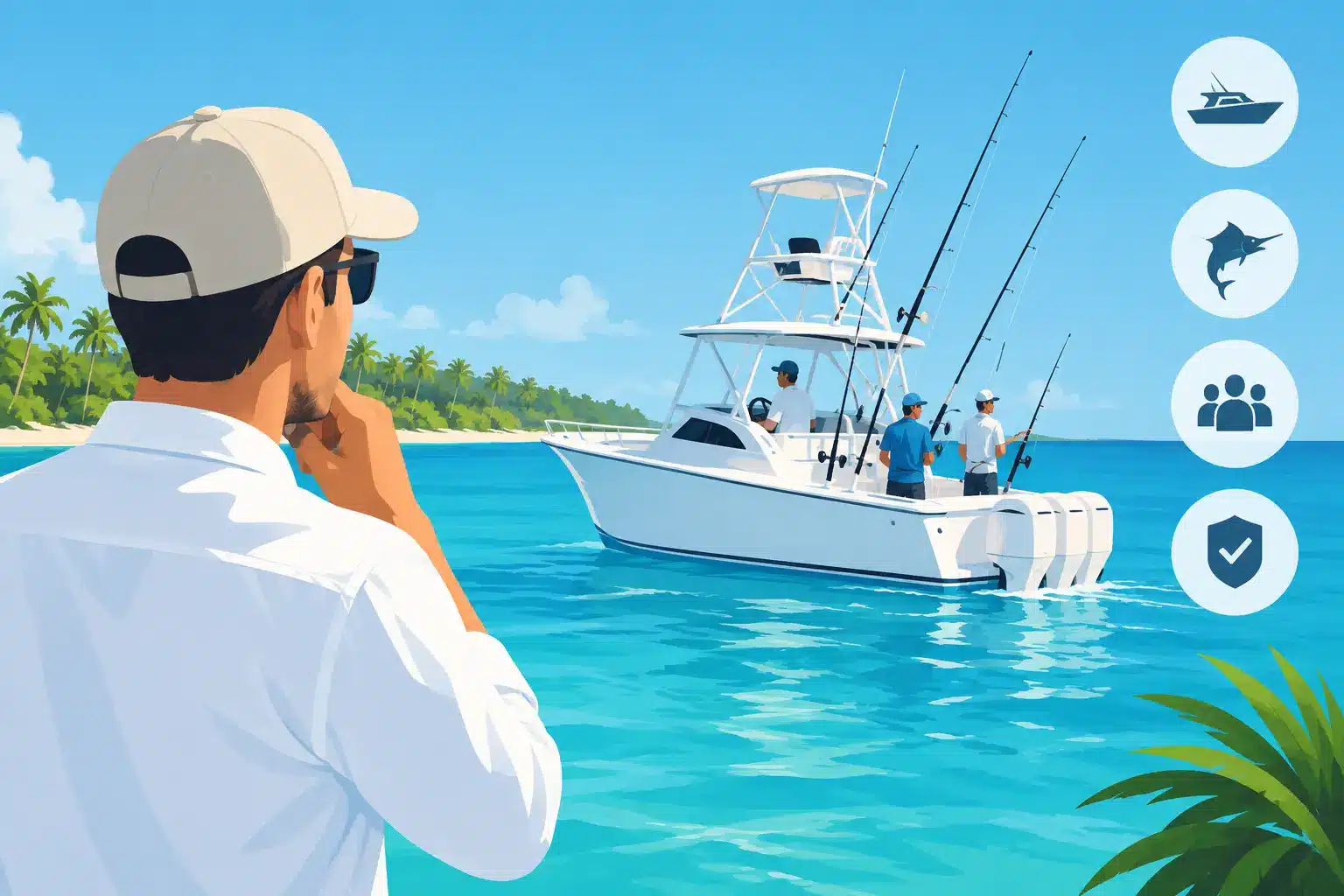
Boat size matters, but layout and condition matter just as much. A larger sportfishing vessel usually offers more shade, seating, storage, and room to move when several lines are in the water. It may also provide a smoother ride offshore. Smaller center-console boats can be fast, capable, and ideal for a more active fishing style, but they offer less protection from sun, spray, and rough seas.
For families and mixed groups, look for shade, a restroom or marine head, secure seating, and enough space for everyone to ride comfortably. For dedicated anglers, ask about the fishing setup: outriggers, fighting chairs, live bait options, trolling spreads, and whether the crew can accommodate techniques beyond basic trolling.
The crew often makes the bigger difference. A skilled captain reads currents, weather, water color, and seasonal patterns. A helpful mate keeps lines organized, coaches first-time anglers, and makes sure every guest has a chance to participate. Reviews can reveal whether a crew is patient, professional, and attentive, not simply whether someone caught a large fish on one lucky day.
It is also worth asking whether the captain speaks English if that is important to your group. Clear communication makes the safety briefing, fishing instructions, pickup plan, and day on the water much easier.
Put Safety and Weather Ahead of the Catch
No fish is worth ignoring a questionable forecast. Caribbean conditions can change quickly, particularly when afternoon winds build or seasonal weather systems move through. A responsible operator will adjust departure times, recommend a different route, reschedule, or cancel when conditions are not suitable.
Before booking, ask what happens if the captain cancels because of weather or sea state. Will you receive a refund, have the option to reschedule, or be offered another excursion? Clear terms protect your vacation budget and reduce last-minute stress.
When you arrive at the marina, pay attention to the basics. Life jackets should be available for every passenger, the boat should appear clean and maintained, and the crew should give practical instructions before departure. If you are bringing children, tell the operator their ages in advance and ask about child-sized life jackets.
Plan for the sun as seriously as you plan for the fishing. Wear a hat, polarized sunglasses, reef-conscious sunscreen, and lightweight clothing that can handle spray. If you have ever experienced seasickness, consider medication or motion-sickness remedies before boarding, following guidance from your health professional. Waiting until you feel sick is usually too late.
Match the Charter to Your Resort Location and Schedule
A fishing trip can start early, and long transfer times can take energy out of the day. Choose a departure marina that makes sense for where you are staying whenever possible. Travelers based in Punta Cana or Cap Cana may prefer an eastern departure, while guests in Bayahibe, La Romana, Puerto Plata, or Samaná should look for charters near their own resort area.
Also consider what surrounds the trip. A four-hour charter may become a six- or seven-hour commitment once you include hotel pickup, marina check-in, travel offshore, and the return transfer. Avoid scheduling a late-night party, a demanding ATV ride, or an early airport transfer immediately afterward. Give yourself room to enjoy the experience instead of watching the clock.
Booking through a destination-focused provider such as JacTravel Group can simplify the logistics, especially when you need hotel transportation, local support, and flexible options alongside other Dominican Republic excursions. The key is still to review the charter details, departure point, and inclusions before confirming.
Ask About Catch-and-Release and Keeping Fish
Many visitors picture bringing home a giant catch, but fishing practices vary by species, location, and operator. Billfish are commonly released, and responsible crews handle them carefully to improve survival. Other fish, such as mahi-mahi or tuna, may be eligible to keep depending on the catch and local practices.
If keeping fish matters to you, ask in advance what the charter allows and whether the crew can clean your catch. Do not assume your resort restaurant can prepare it. Some hotels have food-safety rules that prevent outside fish from entering the kitchen. A reputable charter can explain the realistic options.
Book With Clear Expectations, Then Enjoy the Ride
The best fishing charter is not the one with the boldest photo or the longest species list. It is the one that is honest about conditions, equipped for your group, clear about pricing, and run by a crew that wants you to have a great day on the water.
Set your goals before you book, ask a few specific questions, and leave room for the unpredictability that makes fishing exciting. The next strike may be a trophy catch, or it may simply be the story your group keeps telling long after the Dominican Republic sun has set.