Santo Domingo Food Tours for Curious Travelers
The first bite might be a warm empanada from a busy street stand. The next could be a spoonful of rich sancocho in a family-run restaurant near the Colonial Zone. Santo Domingo food tours turn those moments into a fuller experience, pairing Dominican flavors with the stories, neighborhoods, and local traditions that make the capital such a rewarding day beyond the resort.
For travelers staying in Punta Cana, La Romana, or another beach destination, Santo Domingo is a change of pace worth planning for. It is the Dominican Republic’s historic capital, but it is also a working city where breakfast counters, open-air markets, bakeries, and modern restaurants all share the same culinary map. A guided food experience helps you spend less time guessing where to go and more time enjoying what is on the plate.
What Makes Santo Domingo Food Tours Special
Santo Domingo is not a city where you should expect one single “Dominican dish” and call it a day. Its food reflects Taíno roots, Spanish influence, African heritage, Caribbean ingredients, and the energy of a capital that keeps evolving. On the right tour, the menu can move from a classic fried snack to fresh tropical fruit, strong local coffee, and a sit-down meal that shows how Dominicans eat when they gather with family.
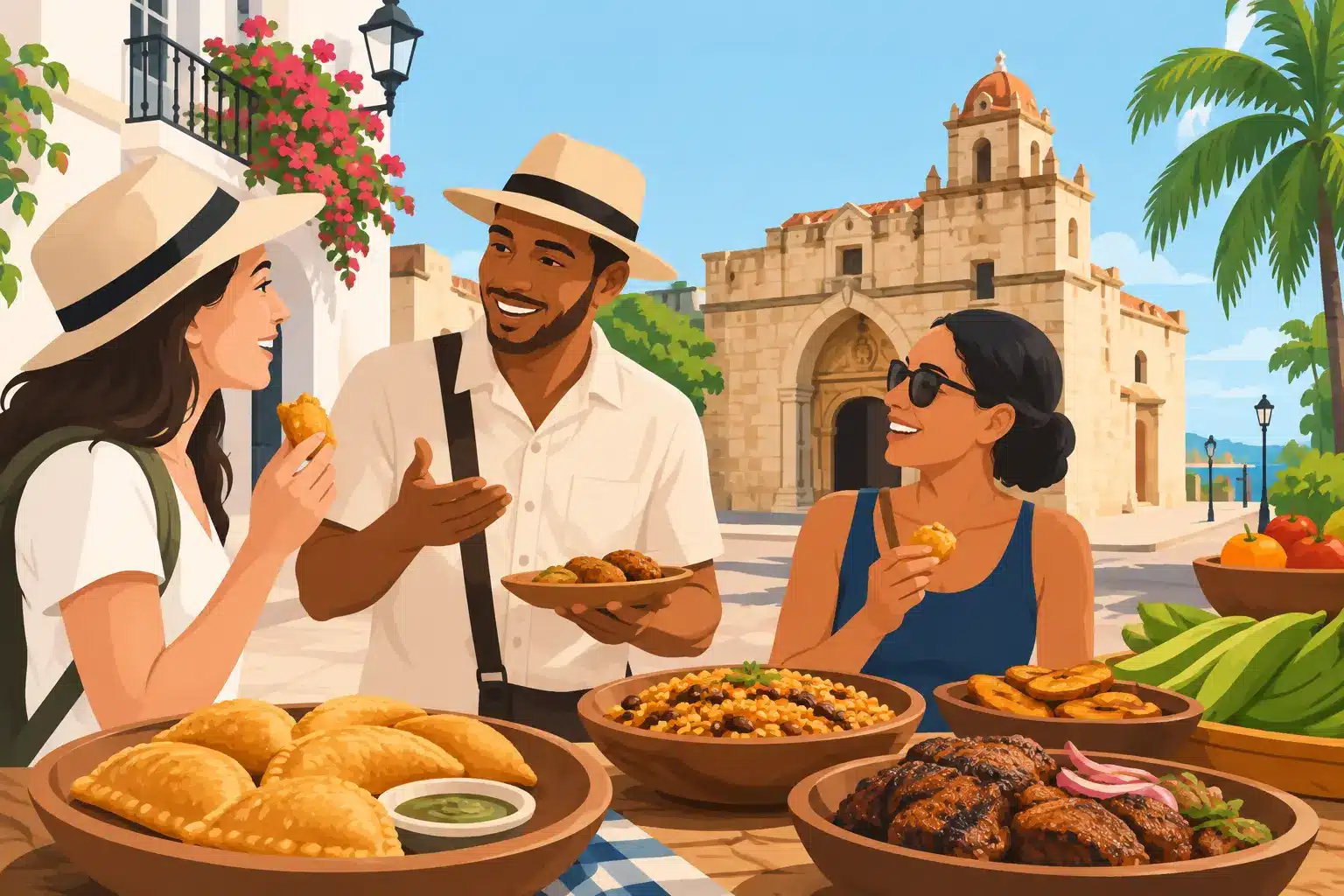
The Colonial Zone is often the natural starting point. Its walkable streets, centuries-old buildings, shaded plazas, and independent eateries make it easy to combine tasting stops with cultural sightseeing. You may sample crispy tostones, cassava-based casabe, pastelitos with savory fillings, or a chilled fruit drink between stops at landmarks and local shops.
A good guide adds the details that make a tasting memorable. Why is mangú a beloved breakfast? What makes Dominican rum part of the social culture? Which ingredients are seasonal, and which are staples in nearly every home kitchen? Food becomes more than a checklist when you understand the people and rituals behind it.
Flavors to Look For Along the Way
Every route is different, and menus can change with the day, the neighborhood, and the operator. Still, there are a few Dominican favorites that travelers should be excited to encounter.
Mangú is mashed green plantain, traditionally served at breakfast with pickled red onions, eggs, cheese, or salami. It is simple, comforting, and deeply local. La bandera, the everyday lunch plate named for the colors of the Dominican flag, usually brings together rice, stewed beans, meat, and salad. It is a great choice for travelers who want to try a satisfying home-style meal rather than only snack foods.
For something heartier, sancocho is a beloved stew made with root vegetables, plantains, and meats. Recipes vary from kitchen to kitchen, which is part of its appeal. Seafood lovers may find fresh fish, shrimp dishes, or coconut-forward preparations depending on the neighborhood and restaurant. Sweet stops can include dulce de leche, coconut treats, seasonal fruit, or a local ice cream break when the afternoon heat calls for it.
Coffee and rum deserve their own moment. Dominican coffee is often served short, sweet, and strong, while rum tastings may introduce visitors to the island’s long history of sugarcane production. If alcohol is not part of your plan, ask whether the tour can substitute fresh juices, coffee, or a nonalcoholic local beverage.
Choose the Right Food Tour for Your Travel Style
Not all Santo Domingo food tours are built the same, so choosing the right format matters. A walking tour in the Colonial Zone is ideal for couples, solo travelers, cruise guests, and anyone who wants food paired with history in a compact, easygoing experience. These tours generally involve walking on uneven cobblestones and spending time outdoors, so comfortable shoes and sun protection make a real difference.
Private tours work especially well for families and groups. You can often move at your own pace, spend more time at the stops you enjoy, and make dietary requests before the day begins. A private guide can also make the experience more flexible if your group wants to add a sightseeing stop, a market visit, or a transfer from your hotel.
Market-focused tours bring more local energy. They are a strong fit for travelers who enjoy seeing produce, spices, ingredients, and daily city life up close. These experiences can feel less polished than a restaurant-led route, but that is often the point. You are seeing where and how ingredients enter the local food culture before they become the meal.
Cooking classes offer a hands-on alternative. Instead of tasting many short samples, you may prepare a few Dominican recipes and sit down to enjoy what you have made. This can be an excellent rainy-day plan or a memorable group activity, though it may cover fewer city landmarks than a walking tour.
How to Plan a Smooth Tasting Day
The best food experiences leave room for appetite and spontaneity. Avoid booking a large hotel breakfast right before your tour. Have something light if needed, bring water, and let your guide know about allergies, vegetarian preferences, or food sensitivities when you reserve. Dominican cuisine often uses dairy, eggs, pork, seafood, and meat broths, so advance notice gives your host the best chance to accommodate you.
Timing matters, too. Morning tours can be cooler and may introduce breakfast foods and market activity. Midday tours often feature fuller lunch dishes, while evening experiences can pair dining with the lively atmosphere of Santo Domingo after dark. There is no universal best option. It depends on whether your priority is heat avoidance, local nightlife, historic sightseeing, or a relaxed meal.
Travelers coming from Punta Cana should be realistic about the distance. Santo Domingo is a full-day commitment when transportation is included, not a quick add-on between pool time and dinner. The payoff is substantial for visitors who want to see a different side of the country, but booking a round-trip transfer, a private driver, or a tour with transportation can remove the biggest logistical concern.
If you are already staying in Santo Domingo, plan your food tour early in your visit. Your guide may point out restaurants, desserts, bars, or neighborhood dishes you will want to revisit later. It is one of the easiest ways to get confident ordering beyond the standard hotel menu.
Why a Guided Experience Is Worth It
You can certainly find excellent food on your own in Santo Domingo. Independent travelers with time to research may prefer that freedom. But a guided food tour brings value through curation, context, and convenience. You do not need to compare dozens of restaurants, wonder whether a stall is appropriate for visitors, or calculate transportation between unfamiliar neighborhoods.
Guides also know when a popular dish is genuinely worth the stop and when there is a better local alternative around the corner. That local knowledge is particularly valuable in a big city where the strongest meal is not always the place with the largest sign or the most visible tourist crowd.
For resort guests, booking through a destination-focused provider such as JacTravel Group can make the day simpler, especially when you need help coordinating transfers, sightseeing, and a food-focused experience in one itinerary. Look for clear inclusions, meeting instructions, cancellation terms, and customer support before confirming. A lower price is attractive, but it is worth checking whether tastings, drinks, entrance fees, and transportation are actually included.
Make Room for More Than One Taste
A food tour is not only about eating until you are full. It is a way to understand Santo Domingo through the flavors locals reach for at breakfast, the ingredients sold in the market, and the meals shared around a table. Come hungry, ask questions, and leave a little space in your schedule afterward. The best next stop may be the café, bakery, or neighborhood restaurant your guide just introduced you to.